November 2026: Get Ready for the Beaver Moon!
Alright, listen up! November 2026 is rolling in, and with it comes a celestial event we all love to talk about: the Beaver Moon. But when exactly can you catch this beauty? Mark your calendars, folks, because the full moon in November 2026 is hitting on November 25th. Yeah, that’s the big night. Around 8:16 AM EST to be precise. So, you’ll want to be looking up, ideally the night before or after, for the full effect. Don’t just rely on the exact time; the magic lingers!

Source : almanac.com
Why ‘Beaver Moon,’ Anyway?
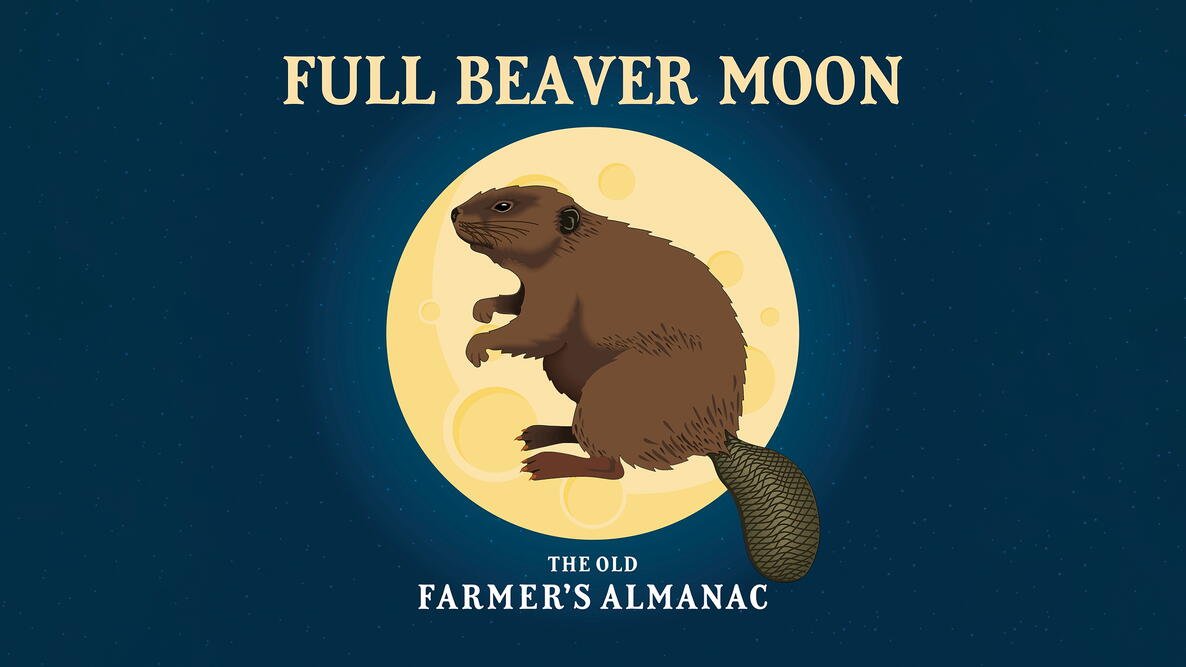
It’s a name with some serious history, passed down from Native American tribes. Think back to when life was… different. Before Netflix and instant gratification. This was the time of year when folks knew the beavers were busy as heck. They were gearing up for winter, building those dams, stuffing their lodges with food. It was a critical time for survival, and the moon marked it. It’s also when the weather got cold enough to make trapping beaver for their thick, warm pelts a prime activity. So, the November full moon basically signaled a major economic and survival period. Pretty wild, huh?
The Beaver Moon 2026: When to Look Up
So, you want to see this thing, right? The peak of the full moon in November 2026 is technically on Wednesday, November 25th. But let’s be real, the moon looks pretty darn full for a couple of nights around that date. Your best bet is to get outside on the evening of the 25th, but honestly, the 24th and 26th are also prime viewing opportunities. The exact time it hits peak fullness is 8:16 AM EST, which might be a bit early for your evening stargazing. So, plan for the sunsets of the 24th and 25th. Clear skies are your best friend here, so keep an eye on the weather forecast!
Is It a Supermoon?
This is where it gets interesting for November 2026. Brace yourselves… it IS a Supermoon! Yep, you heard that right. A Supermoon happens when the full moon coincides with its closest point to Earth in its orbit, called the perigee. Because of this cosmic alignment, the Beaver Moon will appear larger and brighter than usual. We’re talking potentially up to 14% larger and 30% brighter than a micromoon! It’s a spectacular sight, truly. The fact that it’s a Supermoon just adds an extra layer of awesome to an already cool event. Don’t miss out on this bigger, brighter spectacle.
Where Does the Beaver Moon Shine Brightest?
This November 2026 Beaver Moon isn’t playing favorites with location. It’ll be visible across the globe, weather permitting, of course. If you’re in North America, you’re in for a treat. The moonrise on the evening of the 25th will be spectacular, especially if you have a clear horizon. For those on the other side of the planet, you’ll see it rise shortly after sunset on the same day. Just remember, the exact visibility and how high it appears in the sky depends on your specific latitude. But generally? Everyone gets a shot at seeing this celestial show. Just find a spot away from city lights for the best experience.

Source : pagangrimoire.com
Other Names for This November Moon
While ‘Beaver Moon’ is the most popular, it’s not the only name this lunar event has picked up over the centuries. Different cultures had their own takes. Some called it the Frost Moon, which makes total sense given the chilly weather setting in. Others referred to it as the Oak Moon or the Snow Moon (though Snow Moon is more traditionally associated with January, some tribes used it for November too). The Algonquin tribes, for instance, had names related to the freezing of rivers. It just goes to show how much the moon was tied to the natural world and the changing seasons for our ancestors. Each name tells a story.
What About the Beaver Moon’s Meaning and Significance?
Culturally, the Beaver Moon has always been a big deal. It marked a turning point. Winter was coming, and survival was key. It symbolized preparation, introspection, and the coming dormancy of winter. It was a time to finish up harvest tasks, store food, and prepare shelter. For many, it’s still a time to reflect on the year’s accomplishments and get ready for the quieter, colder months. It’s about finishing strong and hunkering down. Some spiritual traditions associate it with deep introspection and perhaps even a bit of magic – think transformation and the power of nature. It’s more than just a pretty sight in the sky; it’s a marker of time and change.
The Astrological Take: Beaver Moon in Taurus (2026)
Okay, let’s sprinkle in some astrology. When this November 2026 Beaver Moon peaks, it’ll be hanging out in the sign of Taurus. This is pretty significant. Taurus is all about stability, comfort, the senses, and material security. Think good food, cozy blankets, and financial stability. So, with the Moon in Taurus, we might feel a stronger pull towards these earthy pleasures and a desire for security. It can be a time for appreciating the tangible things in life and perhaps focusing on building a solid foundation. It encourages us to slow down, savor the moment, and coect with what truly grounds us. It’s a grounded energy, perfect for reflecting on what you’re grateful for before the holiday rush.
Supermoon Size and Brightness: The Visual Impact
Let’s talk visuals. Because the November 2026 Beaver Moon is a Supermoon, it’s going to look seriously impressive. As mentioned, it can appear up to 14% larger and 30% brighter than your average full moon. What does that mean for you? It means a more dramatic presence in the night sky. The moon will cast brighter shadows, and its surface details might be slightly more visible to the naked eye. It’s like the moon decided to put on its best show. Standing out against the November sky, this brighter lunar disk is a photographer’s dream and a stargazer’s delight. It truly commands your attention.
Best Viewing Tips for the Beaver Moon 2026
Want the ultimate Beaver Moon experience? Ditch the city lights. Seriously. Head out to the countryside, find a park with an open view, or even just step into your backyard if it’s dark enough. Give your eyes about 15-20 minutes to adjust to the darkness – this makes a huge difference. A pair of binoculars or a telescope can be fun if you want to see craters and features up close, but it’s absolutely stuing with the naked eye, especially when it’s low on the horizon. As it rises, it often looks even bigger due to an optical illusion called the moon illusion. So, get low, get clear, and just soak it in. Oh, and grab a warm drink; it’ll be chilly!
The Beaver Moon and Your Schedule
With the full moon in November 2026 happening mid-week, you’ve got options. The peak is during the day, but the evening of Wednesday the 25th is your prime time for skywatching. If your schedule is packed, don’t sweat it. The moon will look fantastic on Tuesday evening (the 24th) as it waxes towards full, and again on Thursday evening (the 26th) as it wanes. So, you’ve got a window of opportunity. Plan around your life, but make sure you carve out some time. This isn’t an everyday event, especially with the Supermoon factor. A casual glance can be enough, or you can make a whole event out of it. Your call.
Historical Context: Lunar Calendars and Traditions
For ages, people looked to the moon to keep track of time. Before clocks and calendars as we know them, full moons were major signposts. The Beaver Moon, with its coection to beavers preparing for winter, was a crucial marker. It helped communities plan hunting, fishing, and gathering activities. Many Indigenous cultures developed intricate lunar calendars based on these monthly cycles. These weren’t just practical tools; they were deeply woven into spiritual beliefs and storytelling. Understanding the names and traditions behind the Beaver Moon coects us to this rich human history. It’s a reminder of our ancient relationship with the cosmos. Check out The Old Farmer’s Almanac for more historical tidbits.

Source : almanac.com
What Happens When the Beaver Moon is a Supermoon?
When a full moon aligns with perigee (the closest point to Earth), it’s a Supermoon. For November 2026, this means the Beaver Moon will be noticeably bigger and brighter. While the exact percentage can vary slightly depending on the specific orbit, it’s a significant visual upgrade. It’s not just about aesthetics; some people report feeling a shift in energy, though science doesn’t strongly back this up beyond tidal effects. The heightened gravitational pull from a Supermoon can slightly influence ocean tides, making them a bit more extreme. But mostly? It’s just a stuing celestial event that’s totally worth staying up for. You’ll see a truly impressive moon.
The Science Behind the Beaver Moon’s Appearance
The ‘Beaver Moon’ is just a name we give to the full moon in November. The science is about orbital mechanics. The Moon orbits Earth in an ellipse, not a perfect circle. Sometimes, the full moon happens when the Moon is near its closest point to Earth (perigee), making it appear larger and brighter – a Supermoon. Other times, it’s near its farthest point (apogee), making it appear smaller – a micromoon. In November 2026, these two events coincide. The moon itself isn’t changing; it’s just our perspective from Earth that makes it look different. It’s all about geometry and our vantage point. Understanding how the moon’s orbit works really clarifies things.
Beaver Moon Folklore and Legends
Folklore around the Beaver Moon often revolves around preparation and the coming darkness. Stories might tell of animals disappearing into hibernation or the cautious movements of nocturnal creatures like the beaver itself. In some traditions, it was a time for storytelling around the fire, sharing wisdom before the long winter nights. There are also tales linking the increased moonlight to heightened intuition or even mischief. It’s a period often seen as transitional, moving from the abundance of autumn to the scarcity of winter. Think of it as nature’s way of telling you to wrap things up and get ready. This lunar folklore is rich and varied.
The Beaver Moon and Wildlife Behavior
Why ‘Beaver Moon’? Because this was the time when beavers were most active, building and fortifying their winter homes. Their industriousness was a clear signal to humans that winter was imminent. Other animals were also busy. Many creatures were storing food, migrating, or preparing for hibernation. The increased moonlight might have influenced nocturnal hunting patterns for predators and prey alike. It’s a period of heightened activity for many species as they respond to the changing season and the crisp, cool air. This natural world coection is central to the moon’s name and significance.
Tides and the Beaver Moon’s Influence
Full moons, especially Supermoons like the one in November 2026, have a slightly stronger gravitational pull on Earth. This means they can influence tides more significantly. We’re talking about higher high tides and lower low tides – technically called ‘perigean spring tides’. While this effect is usually subtle for most people, it can be more noticeable in coastal areas with large tidal ranges. It’s a reminder of the powerful, yet often unseen, forces that shape our planet. So, while you’re admiring the moon, remember it’s also subtly tugging at the oceans. It’s a fascinating cosmic gravitational dance.
Future Beaver Moons: Looking Ahead
If you miss the November 2026 Beaver Moon Supermoon, don’t despair! The Beaver Moon returns every year. Next year, in 2027, the full moon in November will occur on November 29th. While it might not be a Supermoon, it will still be a beautiful sight. Each year brings its own nuances. The key is to keep looking up. The cycle continues, and the moon always offers a chance for coection and wonder. You can check out TheSkyLive for future dates and times. Remember, the night sky is always putting on a show, you just have to be there for it.
FAQs About the Beaver Moon 2026
Why is the beaver moon so special?
The Beaver Moon is special for a few reasons. First off, in November 2026, it’s a Supermoon, meaning it’ll look bigger and brighter than usual because it’s closer to Earth. Historically, it’s a name tied to a crucial time for Indigenous peoples – when beavers were busy preparing for winter and trapping for pelts was prime. It’s a marker of transition, signaling the deep cold and the need for preparation. Plus, its appearance in the Taurus sign adds a layer of grounded, earthy energy for reflection.
Source : accuweather.com
What is a worm blood moon?
Okay, so a Worm Moon is actually the full moon in March. It gets its name because it typically appears when the ground thaws and earthworms start to emerge, hence ‘Worm Moon’. Now, a ‘Blood Moon’ isn’t tied to a specific month; it refers to a total lunar eclipse, where the moon takes on a reddish hue due to Earth’s shadow and sunlight scattering through the atmosphere. So, you could theoretically have a Worm Moon that’s also a Blood Moon if a total lunar eclipse happens in March, but they aren’t inherently linked month-to-month.
What does the full beaver moon signify?
The full Beaver Moon signifies preparation, introspection, and the transition into winter. Historically, it marked the time when beavers were busiest building their winter lodges and when trapping for their pelts was most lucrative, signaling the onset of cold weather. Spiritually, it’s often seen as a time to reflect on the year’s efforts, secure your ‘home’ (both literally and figuratively), and embrace the quiet, cozy energy of the coming colder months. It’s about finishing strong and hunkering down. It encourages practical security.
How does the beaver moon affect people?
While the science is still debated and often exaggerated, people have long believed full moons, including the Beaver Moon, can affect mood and behavior. Some report feeling more restless, emotional, or intuitive during this time. More concretely, Supermoons like this one can have a slightly stronger influence on tides. From a psychological standpoint, the historical significance and the astrological placement (Taurus in 2026) can encourage feelings of grounding, comfort-seeking, or a desire for stability. It’s a time when many consciously or unconsciously reflect on their needs for security and comfort before winter.
What’s the best time to photograph the Beaver Moon?
For the best photos of the November 2026 Beaver Moon, aim for when it’s low on the horizon, either during moonrise on the evening of the 25th or just before moonset the next morning. The ‘moon illusion’ makes it appear larger near the horizon, especially when framed by foreground objects like trees or buildings. Also, try shooting a bit before it reaches peak fullness and a bit after – the moon looks incredibly full for a couple of nights, and you might catch better atmospheric conditions or unique lighting. And remember, a clear sky is absolutely crucial for great shots!
Frequently Asked Questions
-
Why is the beaver moon so special?
The Beaver Moon is special for a few reasons. First off, in November 2026, it’s a Supermoon, meaning it’ll look bigger and brighter than usual because it’s closer to Earth. Historically, it’s a name tied to a crucial time for Indigenous peoples – when beavers were busy preparing for winter and trapping for pelts was prime. It’s a marker of transition, signaling the deep cold and the need for preparation. Plus, its appearance in the Taurus sign adds a layer of grounded, earthy energy for reflection.
-
What is a worm blood moon?
Okay, so a Worm Moon is actually the full moon in March. It gets its name because it typically appears when the ground thaws and earthworms start to emerge, hence ‘Worm Moon’. Now, a ‘Blood Moon’ isn’t tied to a specific month; it refers to a total lunar eclipse, where the moon takes on a reddish hue due to Earth’s shadow and sunlight scattering through the atmosphere. So, you could theoretically have a Worm Moon that’s also a Blood Moon if a total lunar eclipse happens in March, but they aren’t inherently linked month-to-month.
-
What does the full beaver moon signify?
The full Beaver Moon signifies preparation, introspection, and the transition into winter. Historically, it marked the time when beavers were busiest building their winter lodges and when trapping for their pelts was most lucrative, signaling the onset of cold weather. Spiritually, it’s often seen as a time to reflect on the year’s efforts, secure your ‘home’ (both literally and figuratively), and embrace the quiet, cozy energy of the coming colder months. It’s about finishing strong and hunkering down. It encourages practical security.
-
How does the beaver moon affect people?
While the science is still debated and often exaggerated, people have long believed full moons, including the Beaver Moon, can affect mood and behavior. Some report feeling more restless, emotional, or intuitive during this time. More concretely, Supermoons like this one can have a slightly stronger influence on tides. From a psychological standpoint, the historical significance and the astrological placement (Taurus in 2026) can encourage feelings of grounding, comfort-seeking, or a desire for stability. It’s a time when many consciously or unconsciously reflect on their needs for security and comfort before winter.
-
What's the best time to photograph the Beaver Moon?
For the best photos of the November 2026 Beaver Moon, aim for when it’s low on the horizon, either during moonrise on the evening of the 25th or just before moonset the next morning. The ‘moon illusion’ makes it appear larger near the horizon, especially when framed by foreground objects like trees or buildings. Also, try shooting a bit before it reaches peak fullness and a bit after – the moon looks incredibly full for a couple of nights, and you might catch better atmospheric conditions or unique lighting. And remember, a clear sky is absolutely crucial for great shots!

Stephens is the Lead Editor at CalendarAndFest.com. With over a decade of experience researching global cultural traditions and chronological systems, he specializes in creating accurate, comprehensive guides for international holidays and strategic planning calendars. Stephens work focuses on the intersection of cultural history and modern time management.