Understanding October 2026: Celebrating Columbus Day and Indigenous Peoples Day in the US

Columbus Day And Indigenous Peoples Day: The October Holiday Showdown 2026
October rolls around, and BAM! You’ve got a holiday. Or two. Depending on who you ask, anyway. It’s that weird time of year where we’re supposed to honor Christopher Columbus and, increasingly, celebrate the folks who were already here way before him. In 2026, this dual celebration (or conflict, really) hits on Monday, October 12th. It’s a federal holiday, sure, but what does it actually mean for most of us? And why the heck is there so much fuss about it?
Let’s get real. For decades, Columbus Day was the big deal. School kids learned about the brave explorer sailing the ocean blue, discovering America. Right? Well, not exactly. Turns out, Columbus didn’t exactly ‘discover’ a continent already teeming with millions of people. And his arrival kicked off a whole heap of trouble for those original inhabitants. This whole historical narrative is getting a much-needed shake-up, and that’s where Indigenous Peoples Day comes storming in.

Source : dogonews.com
The Columbus Conundrum: A Flawed Hero
So, why the beef with Columbus Day? It’s simple, really. The guy wasn’t exactly a saint. Historical accounts paint a picture of brutal treatment towards Indigenous populations. We’re talking enslavement, violence, and the introduction of diseases that decimated communities. Glorifying him feels… wrong. It ignores the immense suffering inflicted on Native Americans. This isn’t just some modern PC whine; it’s a reckoning with a painful history.
Think about it: celebrating a figure associated with genocide and oppression? It doesn’t sit right. Many states and cities started pushing back. They began replacing Columbus Day with, or at least acknowledging alongside it, Indigenous Peoples Day. It’s a move to honor the resilience, culture, and history of the people who have called this land home for milleia. It’s about shifting the focus from a controversial explorer to the actual victims and survivors of colonization. This holiday controversy isn’t new, but it’s definitely heating up.
Indigenous Peoples Day: A Celebration of Survival and Culture
What’s the big idea behind Indigenous Peoples Day? It’s a massive correction. A chance to acknowledge the true history of the Americas. It celebrates the rich diversity of Native American cultures, their contributions to society, and their enduring presence. It’s a day to listen to Native voices, learn about their struggles and triumphs, and show respect for their sovereignty. Forget the one-dimensional explorer narrative; this is about the complex reality of peoples who have survived centuries of adversity.
This isn’t just a token gesture. It’s a growing movement. More and more places are officially recognizing Indigenous Peoples Day. Some places even make it a regular Monday, no holiday pay, but it’s a step. It’s about recognizing that the history of this continent didn’t start in 1492 with an Italian dude. It started thousands of years earlier. It’s about understanding the ongoing impact of colonization and supporting Indigenous communities today. You can find a ton of info on this at Almanac Indigenous Peoples Day.

Source : ccesaratoga.org
When Is It? October 12th, Usually.
In 2026, like most years, Indigenous Peoples Day falls on the second Monday in October. This year, that’s October 12th. It lines up with Columbus Day, which is also always the second Monday in October. This overlap is no accident. It’s the heart of the debate. For some, it’s a day to reflect on the ‘discovery’ narrative. For others, it’s a day to protest that very narrative and uplift Indigenous voices. The fight for recognition is happening coast to coast. Where you live matters.
You’ll see a real mix of how it’s observed. Some states, like South Dakota, have officially celebrated Native American Day on this date for years. Others have recently switched over. Then there are places that still cling to Columbus Day or offer both. It really depends on the local politics and the strength of advocacy from Indigenous communities and allies. Check out Pew Research for details on the state-by-state breakdown. It’s a real patchwork quilt.
The History: How Did We Get Here?
The push to recognize Indigenous Peoples Day didn’t happen overnight. It’s been a decades-long struggle. Back in the 1970s, Indigenous activists started campaigning for a holiday that honored their people. They saw Columbus Day as a painful reminder of conquest. The first official Indigenous Peoples Day celebration was in Berkeley, California, in 1977. Since then, the movement has gained serious traction.
The United Nations even declared 1993 the International Year of the World’s Indigenous Peoples. That gave the movement another boost. States like Colorado, Alaska, and Miesota started making official proclamations. Then came California, and the ball really started rolling. Now, it’s a national conversation. The Wikipedia page on Indigenous Peoples’ Day (United States) gives a good overview of this fight.
Is It a Federal Holiday? The Plot Thickens.
Okay, here’s the kicker. Columbus Day IS a federal holiday. That means federal employees get the day off, and federal offices close. But Indigenous Peoples Day? It’s a bit more complicated. While many states, cities, and even some school districts have adopted it, it’s NOT a federal holiday in its own right. So, you might get the day off, you might not. It really depends on where you work and live.
This distinction highlights the ongoing battle. Having it as a federal holiday would mean official, nationwide recognition. It would signal a much bigger shift in how we view American history. Right now, it’s a mix. Some states have replaced Columbus Day entirely. Others keep both. And some? They just ignore it and make it a regular workday. The fight continues, state by state, city by city. It’s a testament to the power of grassroots organizing and the demand for a more truthful historical narrative.
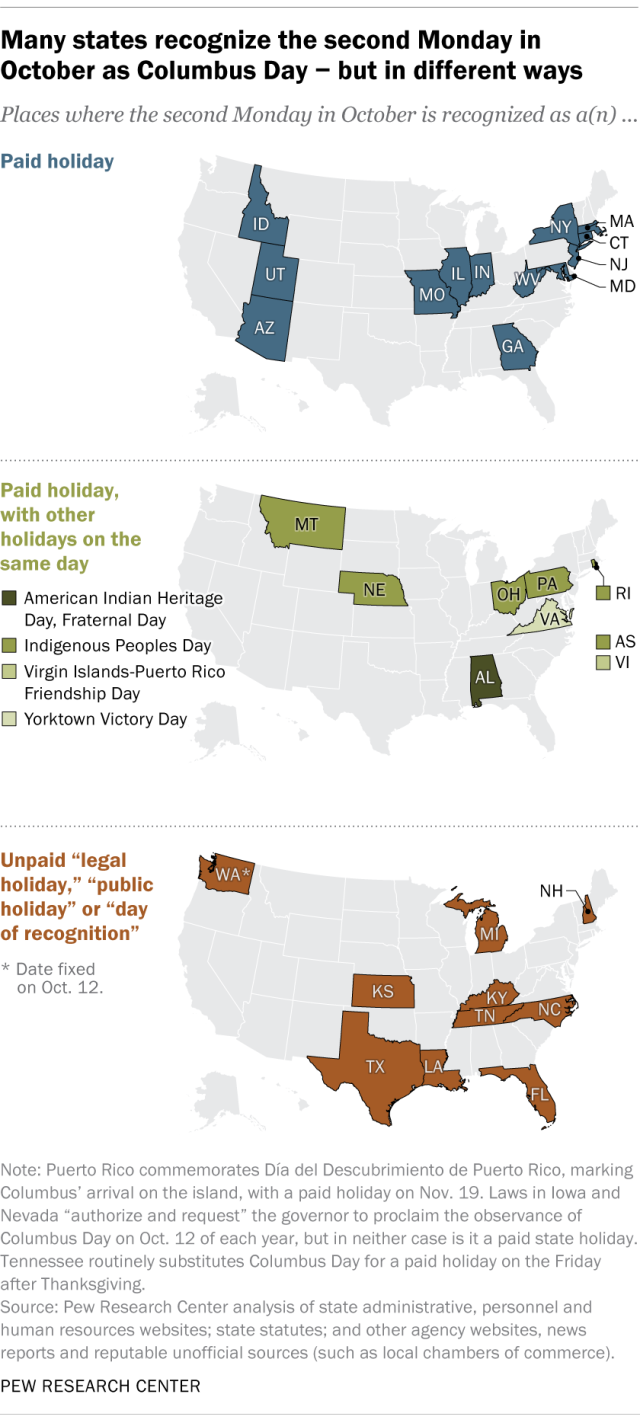
Source : pewresearch.org
Celebrating Indigenous Peoples Day: Beyond the Day Off
So, how do you actually do Indigenous Peoples Day right? Forget the parades with controversial statues. This is about genuine engagement. Learn. Listen. Support. Attend local powwows or cultural events if they’re open to the public. Support Indigenous artists, writers, and businesses. Read books by Indigenous authors. Educate yourself about the history and ongoing issues facing Native communities. It’s about moving beyond a single day and fostering ongoing respect.
Think about it as an opportunity to learn something new, something real. Maybe visit a local museum with Indigenous exhibits. Watch a documentary. Have conversations with friends and family about why this day matters. It’s not just about replacing one holiday with another; it’s about expanding our understanding of American history and acknowledging the people who were here first. It’s about building bridges and fostering a more inclusive future.
The 2026 Calendar: What to Expect
October 2026 is going to look a lot like recent years, with the second Monday being the focal point. For many, it’s a long weekend. For some, it’s a day of reflection and action. For others, it’s just… Monday. The key takeaway? This isn’t a settled issue. The conversation is active, and the shift towards recognizing Indigenous Peoples Day is undeniable. Don’t just take the day off; take the time to understand why it matters.
Columbus Day might still be on the books, but its dominance is fading. Indigenous Peoples Day is carving out its rightful space. It’s a sign of progress, of a society slowly but surely correcting its historical blind spots. So, as you head into October 2026, remember the dual nature of this holiday. Understand the history, the controversy, and the importance of honoring Indigenous peoples. It’s more than just a date on the calendar; it’s a cultural reckoning.
FAQs About Columbus Day and Indigenous Peoples Day
Why do we no longer celebrate Columbus Day?
We don’t really ‘no longer’ celebrate it everywhere, but the reason for the pushback is strong. Columbus’s legacy is tied to brutal colonization, slavery, and violence against Indigenous peoples. Celebrating him ignores that horrific history. Many now see Indigenous Peoples Day as a more accurate and respectful way to acknowledge the true history of the Americas and honor the people who have lived here for thousands of years.
What does Indigenous Peoples Day mean?
It means a lot of things! It’s a celebration of the vibrant cultures, histories, and resilience of Native American communities. It’s a day to recognize their sovereignty and contributions. More importantly, it’s a chance to confront the historical injustices of colonization and advocate for a more equitable future for Indigenous peoples. It’s about looking at the whole story, not just the parts that fit a convenient narrative.
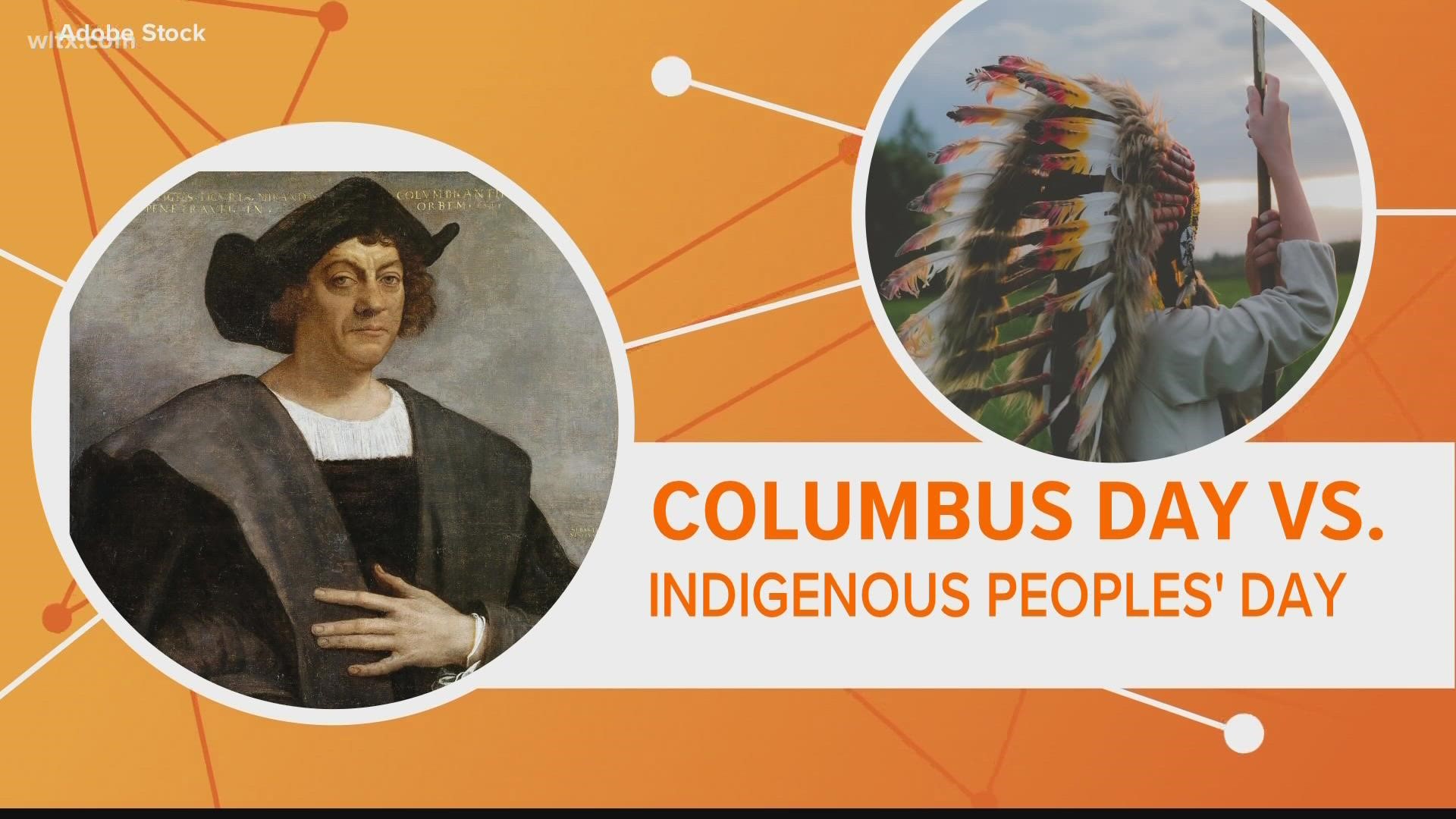
Source : kcentv.com
What US states don’t celebrate Columbus Day?
It’s tricky because ‘celebrate’ can mean different things. Some states have officially replaced Columbus Day with Indigenous Peoples Day. Others acknowledge both. And some don’t officially recognize either as a state holiday. States like Alaska and Hawaii (which celebrates Discoverers’ Day) have official alternatives. Many cities and counties have also made the switch. It’s a mixed bag, and it’s constantly changing. You can find a comprehensive list on Wikipedia, but keep in mind it’s a moving target.
What is the controversy surrounding Columbus Day?
The main controversy? Christopher Columbus wasn’t exactly a hero. He represents conquest, enslavement, and the devastating impact of European colonization on Native populations. Many argue that celebrating him ignores the genocide and suffering inflicted on Indigenous peoples. The rise of Indigenous Peoples Day is a direct response to this historical injustice and a call for a more truthful reckoning with the past.
How did Indigenous Peoples Day start?
It kicked off with Indigenous activists in the 1970s who wanted a holiday that honored their heritage, rather than celebrating a figure associated with their oppression. The first official observance was in Berkeley, California, in 1977. Since then, it’s been a grassroots movement, gaining momentum state by state and city by city, pushing for official recognition and a broader historical understanding.
Frequently Asked Questions
-
Why do we no longer celebrate Columbus Day?
We don’t really ‘no longer’ celebrate it everywhere, but the reason for the pushback is strong. Columbus’s legacy is tied to brutal colonization, slavery, and violence against Indigenous peoples. Celebrating him ignores that horrific history. Many now see Indigenous Peoples Day as a more accurate and respectful way to acknowledge the true history of the Americas and honor the people who have lived here for thousands of years.
-
What does Indigenous Peoples Day mean?
It means a lot of things! It’s a celebration of the vibrant cultures, histories, and resilience of Native American communities. It’s a day to recognize their sovereignty and contributions. More importantly, it’s a chance to confront the historical injustices of colonization and advocate for a more equitable future for Indigenous peoples. It’s about looking at the whole story, not just the parts that fit a convenient narrative.
-
What US states don't celebrate Columbus Day?
It’s tricky because ‘celebrate’ can mean different things. Some states have officially replaced Columbus Day with Indigenous Peoples Day. Others acknowledge both. And some don’t officially recognize either as a state holiday. States like Alaska and Hawaii (which celebrates Discoverers’ Day) have official alternatives. Many cities and counties have also made the switch. It’s a mixed bag, and it’s constantly changing. You can find a comprehensive list on Wikipedia, but keep in mind it’s a moving target.
-
What is the controversy surrounding Columbus Day?
The main controversy? Christopher Columbus wasn’t exactly a hero. He represents conquest, enslavement, and the devastating impact of European colonization on Native populations. Many argue that celebrating him ignores the genocide and suffering inflicted on Indigenous peoples. The rise of Indigenous Peoples Day is a direct response to this historical injustice and a call for a more truthful reckoning with the past.
-
How did Indigenous Peoples Day start?
It kicked off with Indigenous activists in the 1970s who wanted a holiday that honored their heritage, rather than celebrating a figure associated with their oppression. The first official observance was in Berkeley, California, in 1977. Since then, it’s been a grassroots movement, gaining momentum state by state and city by city, pushing for official recognition and a broader historical understanding.
Stephens is the Lead Editor at CalendarAndFest.com. With over a decade of experience researching global cultural traditions and chronological systems, he specializes in creating accurate, comprehensive guides for international holidays and strategic planning calendars. Stephens work focuses on the intersection of cultural history and modern time management.